
Introduction
As businesses expand their operations and deliver products to customers across different locations, keeping goods safe during transportation becomes increasingly important. From delicate electronic equipment to industrial components and manufactured products, every item has different protection requirements. Poor packaging can lead to damaged goods, unnecessary replacement costs, delayed deliveries and disappointed customers. This makes selecting suitable protective packaging an essential part of an effective supply chain.
For manufacturers, wholesalers, retailers and distribution companies, packaging should do more than simply cover a product. It needs to provide reliable protection, suit the product’s dimensions and weight, and remain practical for storage, handling and transportation. Businesses looking for dependable protective packaging UK suppliers should therefore consider both the materials available and the expertise required to create an appropriate solution.
Understanding the Role of Protective Packaging
Products can encounter several potential hazards before reaching their final destination. Packages may be dropped, stacked under heavy loads, exposed to vibration or moved repeatedly between warehouses and delivery vehicles. Even relatively minor impacts can damage sensitive items when they are not properly secured.
Protective packaging helps minimise these risks by creating a barrier between the product and its surroundings. Depending on the application, this might involve cushioning materials, shaped foam inserts, protective blocks, corrugated cartons or additional wrapping.
The most suitable solution depends on the characteristics of the item being transported. Fragile products may require shock absorption, while heavier manufactured components need materials capable of supporting their weight and limiting movement. Products with unusual shapes may also require specially designed internal packaging.
Understanding these requirements before selecting materials helps businesses avoid both insufficient protection and unnecessary packaging expenses.
Why Standard Packaging Is Not Always Enough
Standard packaging products are convenient for many everyday applications. However, they may not provide the level of protection needed for unusual dimensions, sensitive surfaces or specialised industrial equipment.
For example, a business shipping precision components might find that ordinary cardboard inserts allow too much movement inside the box. Similarly, delicate finished products could require additional cushioning to prevent scratches and impact damage.
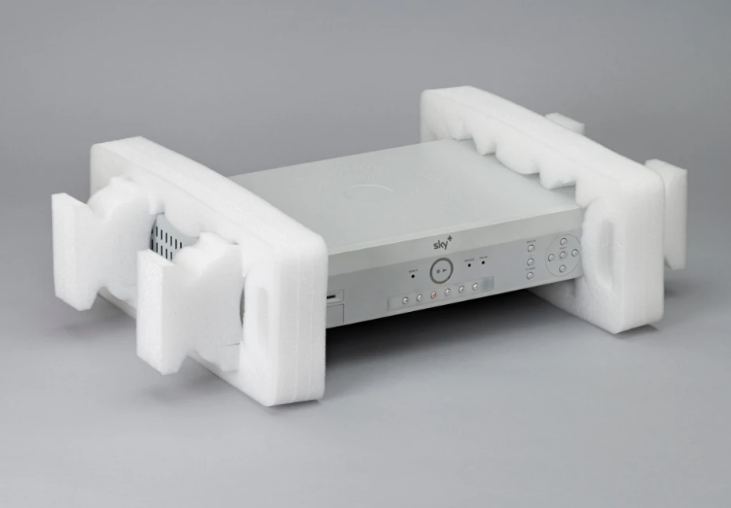
Bespoke packaging offers an alternative by adapting the design to the specific product. Internal compartments, shaped foam inserts and accurately sized outer cartons can work together to hold products securely throughout transportation.
This approach can also make packing operations more consistent. When employees have packaging designed around a particular product, there is less need to improvise with additional materials or spend time adjusting unsuitable boxes.
Exploring Different Protective Packaging Materials
Different materials provide different performance characteristics. Choosing between them requires an understanding of the product, transportation conditions and expected handling requirements.
Polyethylene Foam
Polyethylene foam is widely used where cushioning, flexibility and resistance to repeated handling are important. Its lightweight construction makes it useful for protecting electronic equipment, manufactured components and other products that need additional impact protection.
It can be supplied in different densities and formats, allowing packaging designers to select materials that suit particular applications.
Expanded Polystyrene
Expanded polystyrene, commonly known as EPS, is another useful material for protective applications. Its lightweight structure and thermal insulation properties make it suitable for a range of industrial and commercial packaging requirements.
EPS can be cut and shaped to accommodate specific product dimensions. This makes it particularly useful for packaging items that need a secure internal fit without adding excessive weight to the overall shipment.
Polyurethane Foam
Polyurethane foam offers cushioning characteristics that can be useful when protecting products with delicate surfaces or irregular shapes. Its versatility allows it to be incorporated into packaging designs for different industries and applications.
The appropriate foam type and density should be selected according to the product’s weight, fragility and handling conditions.
Corrugated Packaging
Corrugated cartons provide an important outer layer of protection. They are available in different constructions and sizes, making them suitable for everything from lightweight retail products to heavier commercial shipments.
When combined with suitable internal cushioning, corrugated packaging creates a practical system for keeping products secure during distribution.
The Advantages of Bespoke Packaging Design
A well-designed packaging solution considers the entire journey a product will make. This includes warehouse storage, loading, transportation, unloading and final delivery.
Bespoke designs can help businesses address several practical challenges:
- Improved product security: Custom-shaped inserts help reduce unnecessary movement inside the package.
- Better use of space: Packaging designed around product dimensions can minimise wasted internal space.
- More efficient packing: Consistent packaging specifications can simplify repetitive packing processes.
- Reduced material waste: Selecting suitable materials and dimensions can help avoid excessive packaging.
- Professional presentation: Carefully designed packaging creates a more organised and considered customer experience.
Another important advantage is the ability to source different packaging components as part of one coordinated solution. Rather than purchasing outer cartons and internal protection from multiple suppliers, businesses can work towards a complete packaging design that considers how every element fits together.
Balancing Product Protection with Sustainability
Environmental considerations are becoming increasingly important in packaging decisions. Businesses are looking for ways to reduce unnecessary materials while maintaining the level of protection their products require.
One practical starting point is reviewing existing packaging specifications. Oversized cartons, excessive void filling and unsuitable protective materials can all contribute to unnecessary waste.
Selecting the correct dimensions and material quantities can improve packaging efficiency. Where appropriate, businesses can also explore recyclable materials and products manufactured using recycled content.
However, sustainability should not come at the expense of product safety. A package that fails to protect its contents may result in damaged products, returns and additional transportation, creating further environmental costs.
The objective should be to find a sensible balance between protection, material efficiency and environmental responsibility.
See also: Business Predictions for 2026 and Beyond
Choosing a Reliable Packaging Partner
Selecting a supplier involves more than comparing the prices of individual packaging products. Businesses should consider whether the supplier can understand their requirements, recommend suitable materials and provide solutions for both standard and specialised applications.
Experience in packaging design and manufacturing can be particularly valuable when products have unusual dimensions or specific handling requirements.
Advanced Protective Packaging is based in Manchester and supplies customers throughout the UK. Its services include custom-designed packaging solutions as well as standard packaging products. The company works with materials such as polyethylene, polystyrene, polyurethane and corrugated packaging, helping businesses address a variety of product protection requirements.
Its complete packaging approach can also include designing both the outer carton and internal fitment, making it easier for businesses to coordinate the different elements of their packaging.
Final Thoughts
Effective packaging is an important investment in product safety, operational efficiency and customer satisfaction. Choosing suitable materials and designs can help businesses minimise transportation damage while making their packing processes more organised.
Whether a company needs foam cushioning, shaped inserts, protective blocks or complete carton solutions, the right approach begins with understanding the product and its journey through the supply chain.
For organisations reviewing their protective packaging UK requirements, working with an experienced packaging specialist can make it easier to identify practical options. Advanced Protective Packaging offers bespoke design capabilities and a range of packaging materials to help businesses find solutions suited to their products and operational needs.