
A home in Hong Kong rarely offers spare space. Flats are compact, rooms often serve more than one purpose, and every square foot has to earn its keep. Yet some of the most comfortable homes in the city are also among the smallest. The difference is rarely the size of the flat itself. It is the way the space has been planned, and how honestly that plan reflects the way the people inside it actually live.
Start with How You Live, Not How It Looks
Before buying anything or moving a single piece of furniture, spend a week noticing how your home is really used. Which chair does everyone sit in? Where do bags, shoes and parcels pile up? Which corner stays empty, and which surface is always covered? The answers tell you more than any showroom ever will, because a home should be arranged around daily habits rather than an imagined ideal.
Make a short list of the three things your home must do well. For one household that might be cooking proper meals, working from home and having friends over. For another it might be a quiet place to read, room for a child to play and space to exercise. Once those priorities are clear, decisions become much easier. Anything that supports them stays. Anything that gets in their way can go, be moved or be replaced with something that works harder.
Light, Colour and the Feeling of Space
Light is the cheapest way to make a room feel larger, and in a compact flat it matters more than almost anything else. Keep window areas as clear as possible. Heavy curtains, tall shelves and bulky items placed in front of windows all steal daylight and make a room feel closed in. Sheer curtains or simple blinds let light through while still giving privacy, and they take up almost no visual space.
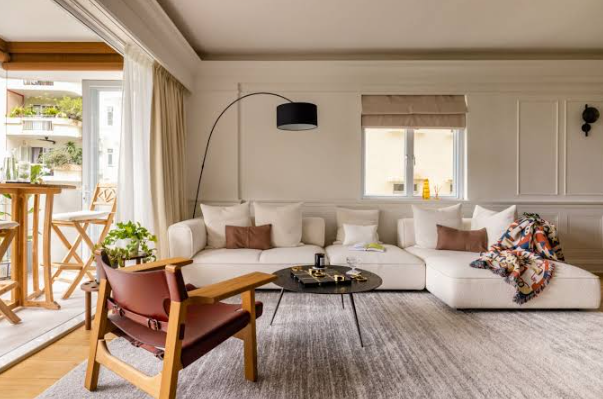
Colour works in a similar way. Pale, warm neutrals on the walls bounce light around the room and create a calm background that makes the space feel open. That does not mean a home has to be plain white. A soft sage green in a bedroom, a pale warm grey in the living room or a gentle dusty blue in a study can all add character without shrinking the room. Save strong, dark colours for small accents, such as a cushion, a piece of art or a single painted door, where they add depth without closing the space in.
Storage That Works Without Shouting
In a small home, storage is not a luxury. It is what keeps the place liveable. The trick is to build storage into the structure of the room instead of adding more boxes and cabinets that eat up floor space. A platform bed with drawers underneath, a bench seat with a lift-up lid, or shelving built into an awkward alcove can hold a surprising amount without making the room feel crowded, and browsing interior design hong kong examples can show how professionals fit that kind of storage into a compact flat.
Be honest about what you own. Most small homes are not short of storage so much as full of things nobody uses. A regular clear-out, even a small one each season, keeps the flat manageable. If an item has not been used in a year and holds no real sentimental value, it is probably taking up space that your daily life needs more.
When to Ask a Professional for Help
Some projects are easy to handle alone, such as repainting a room or rearranging furniture. Others benefit from an experienced eye, especially when walls need to move, built-in storage is required, or the layout simply is not working. A professional can spot problems you have learned to live with, and can suggest solutions that would not occur to most homeowners.
If the decisions feel overwhelming, looking at local design services can help you find a team that understands compact city living and the practical limits of a small flat. A good studio will start by asking how you live, not by showing you a catalogue. Bring your list of priorities, your measurements and a realistic budget, and ask how they would approach the space. The right team will explain their thinking clearly and respect your limits.
Frequently Asked Questions
1. How can I make a small living room feel larger?
Start with light and clear floor space. Keep windows unobstructed, choose pale wall colours, and remove any furniture that blocks the main routes through the room. A rug that is slightly larger than the seating area can also help, because it defines the space without adding visual clutter. Finally, reduce the number of small decorative objects on display, since a few well-chosen pieces look calmer than a crowded shelf.
2. What colours work best in a compact flat?
Pale, warm neutrals usually work best, because they reflect light and create a calm, open background. Soft whites, warm greys, pale sage and gentle dusty blue are all good choices. Add colour through cushions, art and textiles, which are easy to change. Strong, dark colours are best used as small accents rather than on large walls, so the room keeps its sense of space.
3. Is it worth hiring a designer for a small home?
Often, yes. Small homes are harder to plan than large ones, because every decision has a bigger effect and there is less room for error. A designer can help with layout, storage and lighting in ways that save money by avoiding costly mistakes. For a small project, even a single consultation can give you a clear plan to follow at your own pace.
Conclusion
A small Hong Kong home can be a genuinely comfortable place to live when it is planned around real daily life. Start by understanding how you use each room, then work through light, colour, storage and furniture one step at a time. Keep only what earns its place, choose pieces that work hard, and do not be afraid to ask for professional help with the trickiest decisions. The goal is not a showroom. It is a home that feels calm, open and easy to live in, every single day.