Newsletter Subscribe
Enter your email address below and subscribe to our newsletter
Enter your email address below and subscribe to our newsletter

 ByJohn A
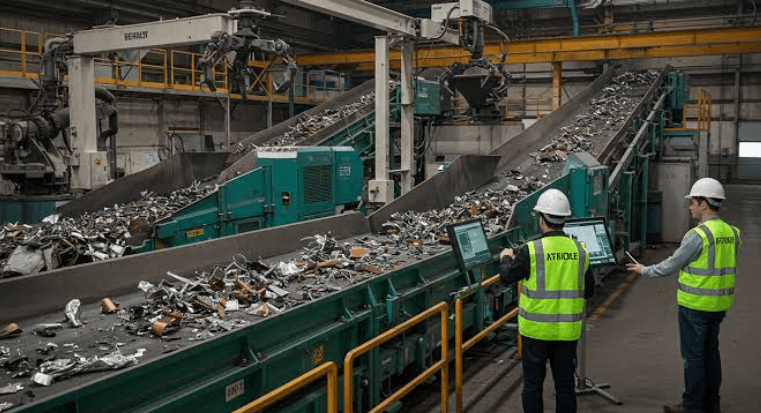
Plastic recycling has become an important part of modern manufacturing as businesses look for practical ways to reduce waste, recover useful materials, and improve resource efficiency. However, discarded plastic cannot always be reused immediately. Depending on its type and condition, it may need to be sorted, cleaned, shredded, ground, or processed into a more uniform form before entering another production stage.
Size-reduction equipment plays a significant role in these operations. By reducing plastic components, rejected products, and manufacturing scrap into smaller particles, processing facilities can prepare materials for subsequent recycling or manufacturing processes. The choice of equipment depends on material characteristics, required particle size, production volume, and operating conditions.
Understanding these factors helps manufacturers assess available technologies and choose machinery that suits their actual processing requirements.
Plastic pulverizers are designed to reduce suitable plastic materials into fine particles or powder. They are used in applications where conventional cutting or shredding alone may not provide the desired output size.
The specific design varies according to the material being processed and the intended result. Some systems are suited to particular thermoplastics, while others are designed for specialized industrial applications.
How Size Reduction Supports Recycling
Plastic waste often arrives in different shapes and sizes. Scrap may include production offcuts, rejected moulded parts, sheets, pipes, or previously processed plastic. Before it can be reused, the material may require preparation to meet the needs of a downstream process.
Pulverizing can help create a more uniform feedstock for applications such as selected compounding operations, material blending, and certain recycling processes. The resulting particle size and quality depend on the plastic type, equipment configuration, and operating parameters.
Pulverizing is not suitable for every plastic recycling task. Larger pieces may need to pass through shredding or granulation equipment first, while contamination and moisture may require separate handling.
Differences Between Shredders, Granulators, and Pulverizers
These machines perform related but distinct functions. Shredders commonly reduce bulky material into larger pieces, while granulators generally produce smaller, more manageable particles. Pulverizers are used when a finer output is required.
A processing line may use several of these technologies in sequence. Selecting the right combination depends on the incoming material, the required final size, and the production process that follows.
Important Factors When Selecting a Pulverizer
Purchasing industrial machinery requires more than comparing rated capacity or purchase price. A suitable system must process the intended material reliably while meeting production and maintenance requirements.
Plastic Type and Material Properties
Different plastics respond differently to mechanical processing. Their hardness, toughness, thermal behaviour, and tendency to soften under friction can affect grinding performance.
Materials such as polyethylene, polypropylene, polystyrene, and engineering plastics may require different operating conditions or machine configurations. Some materials may also present additional challenges because of fillers, additives, or mixed compositions.
Before selecting a machine, buyers should provide the supplier with accurate information about the plastic grades and forms to be processed. Testing representative samples may help determine whether the proposed configuration is appropriate.
Required Particle Size
The intended output size is a central specification. Some manufacturing applications require relatively coarse particles, while others need finer powder with a controlled size distribution.
A supplier should explain the expected output under stated operating conditions rather than relying on a general maximum or minimum figure. Buyers should also clarify how particle size is measured and whether additional screening or classification equipment is required.
Processing Capacity
Rated capacity can vary depending on material properties, screen or grinding configuration, and the target output size. A machine that performs well with one plastic may achieve a different throughput with another.
Facilities should estimate realistic production requirements and discuss expected operating performance with the equipment supplier. Planning around actual material conditions can help avoid both undersized equipment and unnecessary investment in excessive capacity.
Energy Consumption and Operating Costs
Electricity, wear parts, labour, maintenance, and downtime all contribute to the cost of operating size-reduction equipment. Energy efficiency should therefore be considered alongside production capacity and output quality.
Buyers can request information about installed motor power, expected operating conditions, routine maintenance, and the replacement frequency of key components. These details provide a stronger basis for estimating long-term operating costs.
Evaluating Machinery Manufacturers and Suppliers
A reliable supplier should understand the processing application and provide equipment information that supports an informed purchasing decision.
Businesses researching plastic pulverizer manufacturers South Korea can use a structured evaluation process to compare machinery options, technical support, and overall suitability.
Review Technical Specifications
Start by examining the machine’s operating principle, feed requirements, motor power, expected output range, and available configuration options. Check whether the equipment is designed for the specific plastic materials and particle size required by the facility.
Technical specifications should be clear enough to compare products consistently. If information is missing or ambiguous, request written clarification before proceeding.
Assess Manufacturing Quality
Machine construction can influence reliability, vibration, service life, and maintenance needs. Relevant considerations may include the frame, grinding components, bearing arrangements, drive system, guarding, and accessibility for routine servicing.
The appropriate design depends on the intended duty and operating environment. Buyers should seek relevant technical documentation and, where practical, review demonstrations or references for similar applications.
Investigate After-Sales Support
Industrial machinery may require installation assistance, operator training, replacement parts, or troubleshooting. Support availability can become especially important when equipment operates in a continuous production environment.
Before purchasing, clarify warranty coverage, service response arrangements, spare-parts availability, and the information provided for routine maintenance. For imported machinery, buyers should also consider shipping time and the practical process for obtaining replacement components.
Compare Suppliers Fairly
Supplier comparisons should use equivalent specifications. A lower-priced machine may differ in motor configuration, included accessories, control systems, or after-sales coverage.
A comparison checklist can help purchasing teams record the same information for each option. This reduces the risk of choosing a product based on headline price while overlooking important differences.
Designing an Effective Plastic Processing Line
A pulverizer rarely operates independently in a larger recycling facility. Its performance depends on the equipment and processes around it.
Material Preparation
Incoming plastic may need sorting, cleaning, drying, or preliminary size reduction. Removing unsuitable materials and contaminants helps protect equipment and improve the consistency of the output.
The appropriate preparation process depends on the waste stream. Clean manufacturing scrap may require fewer steps than mixed post-consumer material.
Feeding and Material Flow
Consistent feeding can help a machine operate more predictably. Excessive feed rates may reduce performance or increase the likelihood of interruptions, while insufficient feeding can leave equipment underused.
Processing lines should be planned so that upstream and downstream equipment can handle the expected material flow. Collection bins, conveyors, and transfer points should be selected according to the facility layout and operational needs.
Screening and Output Management
Some applications require screening or classification after grinding to achieve a target particle-size range. Material that does not meet the required specification may need further processing.
Clear quality checks help determine whether the output is suitable for the next manufacturing stage. Particle size, contamination, and material consistency may all be relevant, depending on the application.
Safety and Environmental Considerations
Plastic size-reduction equipment contains moving components and can generate noise, heat, and airborne particles. Facilities should evaluate these hazards during equipment selection and installation.
Machine Guarding and Operator Training
Appropriate guarding, emergency stops, electrical protection, and access controls are important features to review. Operators should receive training on safe operation, routine inspections, and the correct shutdown procedure.
Maintenance should be performed according to manufacturer instructions and site safety procedures. Equipment must be isolated appropriately before servicing or clearing blockages.
Dust and Noise Management
Fine plastic particles may become airborne during processing, depending on the material and system design. Dust collection, ventilation, and suitable housekeeping procedures can help manage these conditions.
Noise levels should also be assessed, particularly where equipment operates for long periods. The facility should follow applicable occupational health and safety requirements.
Responsible Material Handling
Recycling efficiency depends on managing material streams carefully. Clear separation of plastic types, proper storage, and contamination control can improve the usefulness of recovered material.
Facilities should also consider how rejected material and process residues will be handled. A well-designed workflow supports both operational efficiency and responsible waste management.
1. What is the difference between a plastic pulverizer and a granulator?
A granulator typically reduces plastic into smaller chips or granules, while a pulverizer is designed to produce finer particles or powder. The correct choice depends on the required output size and the downstream manufacturing process.
2. How can buyers estimate the required machine capacity?
Buyers should consider daily material volume, operating hours, plastic type, target particle size, and expected downtime. Supplier discussions and representative material tests can help establish realistic throughput expectations.
3. What should be checked before importing plastic processing equipment?
Important considerations include technical specifications, electrical compatibility, safety features, shipping costs, installation requirements, warranty terms, spare-parts availability, and local service support. Buyers should also confirm any applicable import and compliance requirements.
See also: Emerging Trends in Business Workflow Management
Selecting suitable plastic size-reduction equipment requires a clear understanding of material properties, required particle size, production capacity, operating costs, and safety considerations. A machine that matches the application can help prepare plastic waste for reuse and improve the consistency of downstream processing.
Manufacturers should evaluate suppliers using comparable technical specifications and investigate manufacturing quality, documentation, and after-sales support before committing to a purchase. Careful planning of material preparation, feeding, screening, and maintenance can further improve the performance of a recycling operation while supporting more efficient resource use.